People think the “hidden costs” are a few random fees at closing.
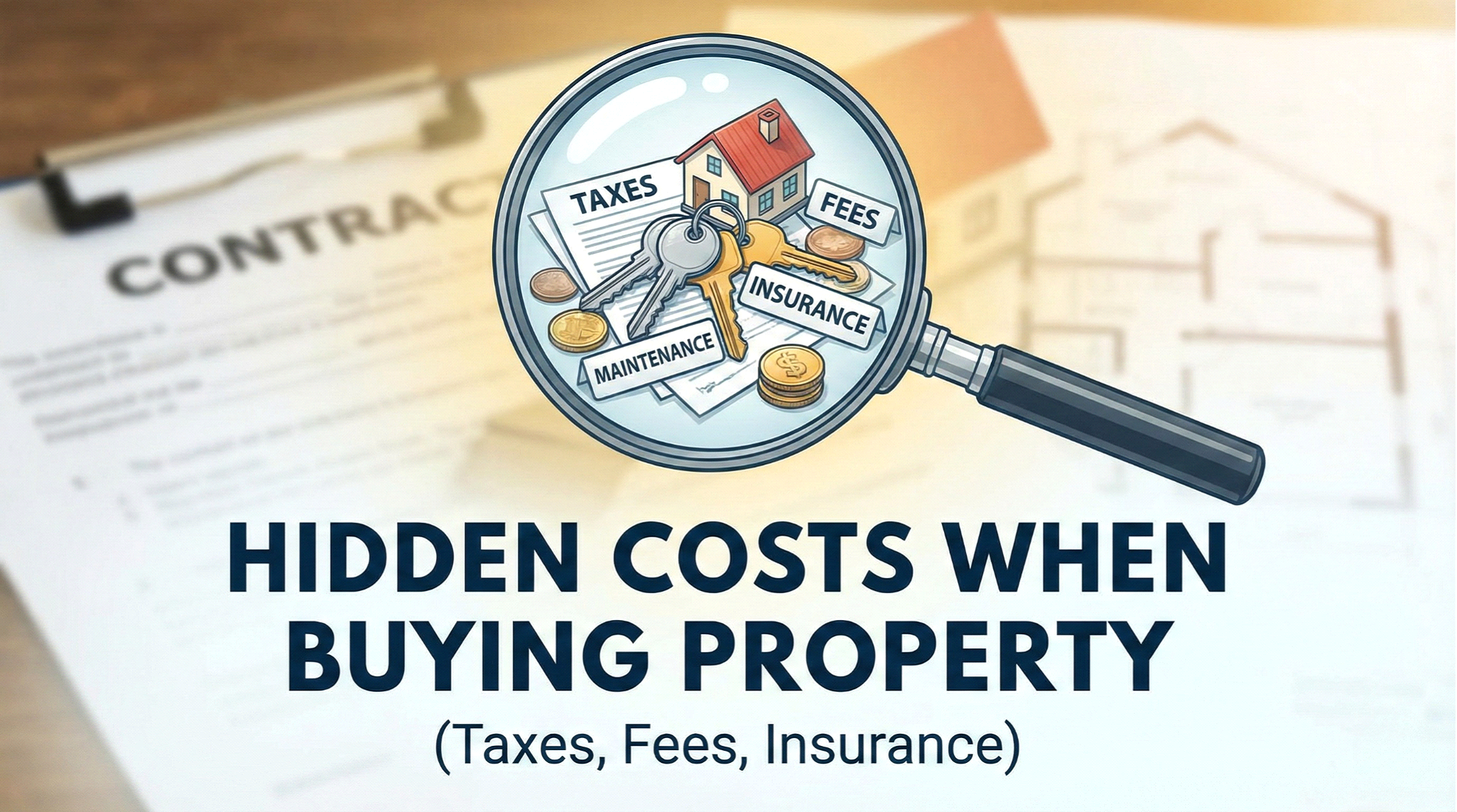
In reality, the expensive surprises usually come from three places: taxes tied to the transaction, insurance, and anything connected to an HOA or condo building.
Here’s a plain English breakdown, with Florida examples where it matters.
Closing costs that show up even if the home price looks perfect
Florida documentary stamp tax
Florida charges documentary stamp tax on certain documents, including deeds that transfer real property and mortgages tied to financing.
The deed rate is commonly $0.70 per $100 of consideration (Miami-Dade has different rules in some cases).
Who pays it can be negotiable in the contract, but it is a real line item you should expect to exist.
Nonrecurring intangible tax if you finance
If you get a mortgage, Florida has a nonrecurring intangible tax that is calculated as loan amount × 0.002 (2 mills).
This is one of those fees buyers do not hear about until the closing disclosure shows up.
Recording fees and public record costs
Your mortgage and other documents get recorded in public records, and clerks charge recording fees. Exact amounts vary by county and page count, but it is part of a normal financed closing.
Title related costs
You will usually see some mix of title search, settlement/closing services, and title insurance costs in your closing paperwork. A lot of Florida buyers underestimate this because it does not “feel” like a real cost until the final numbers come in.
Bankrate’s Florida overview is a good sanity check for what typically appears in Florida closings.
Property taxes that surprise buyers
Tax prorations at closing
Even if you buy in the middle of the year, property taxes are typically prorated between buyer and seller at closing. That can mean you owe a chunk upfront as a credit depending on timing and what the contract says. (This shows up inside your closing disclosure, not as a separate “bill.”)
Florida property tax calendar and delinquency rules
Florida property tax bills are payable starting November 1, with early payment discounts commonly available, and unpaid taxes become delinquent April 1 (with some timing nuance tied to when notices are mailed).
Why this matters as a buyer: if you close near the end of the year, your lender may collect escrows and prepaids that feel huge.
Insurance costs that change the whole deal
Homeowners insurance can be a budget breaker
Florida’s property insurance market has been volatile, and premiums can swing hard based on roof age, location, wind risk, and carrier rules.
A Florida Office of Insurance Regulation market update (May 2024) cited an average homeowners premium in the admitted market of about $3,600, while also noting rate filing trends.
Broader market context from Florida Office of Insurance Regulation is also useful if you want to back your content with data and not vibes.
Flood insurance is usually separate
Most homeowners policies do not cover flooding, which is why flood insurance is commonly separate.
Florida’s CFO site also notes flood insurance is not required by Florida law, but lenders may require it if you have a mortgage and the property is in a higher risk zone.
A practical buyer move: get insurance quotes before your inspection period ends. If you wait, you can end up locked into a deal that does not cashflow the way you expected.
New flood disclosure requirement in Florida
Florida created a specific flood risk disclosure requirement in statute (Section 689.302). Sellers must provide a flood disclosure to a buyer at or before the time the sales contract is executed.
This matters because flood history and flood related costs can turn a “deal” into a liability fast.
HOA and condo costs that blindsight people
HOA dues are the obvious part
Monthly dues are easy to spot. What is not easy to spot is what the association is about to charge you later.
Special assessments, reserves, and building requirements
Florida’s condo environment has changed. The state’s condo resources explain reserve studies and Structural Integrity Reserve Studies (SIRS) and why they exist: to ensure funding for major repairs and replacement of structural elements.
For buyers, the risk is simple: if reserves are weak and major work is coming, you can get hit with a special assessment or higher monthly dues.
Also, lenders can scrutinize condo financial health and special assessments. Fannie Mae has condo review requirements that lenders follow in many cases.
What to ask for before you buy a condo:
- Current budget and reserves
- Any active or planned special assessments
- Recent meeting minutes
- Inspection and engineering reports if available
- Insurance coverage details for the association
The “quiet” costs most people forget to budget for
These are not Florida specific, but they matter:
- Inspection, wind mitigation, and other reports if required by your insurer or lender
- Appraisal and lender fees (part of typical mortgage closing costs)
- Moving, utility deposits, immediate repairs, locks, pest control
- Furniture and window treatments (this one gets people every time)
A simple way to avoid getting surprised
Before you make an offer, ask your lender or agent for a rough “all in” monthly and closing estimate that includes:
- Estimated insurance (homeowners plus flood if relevant)
- Florida taxes tied to financing (nonrecurring intangible)
- Any documentary stamp taxes that apply in the deal
- HOA or condo financial red flags (reserves, assessments)